
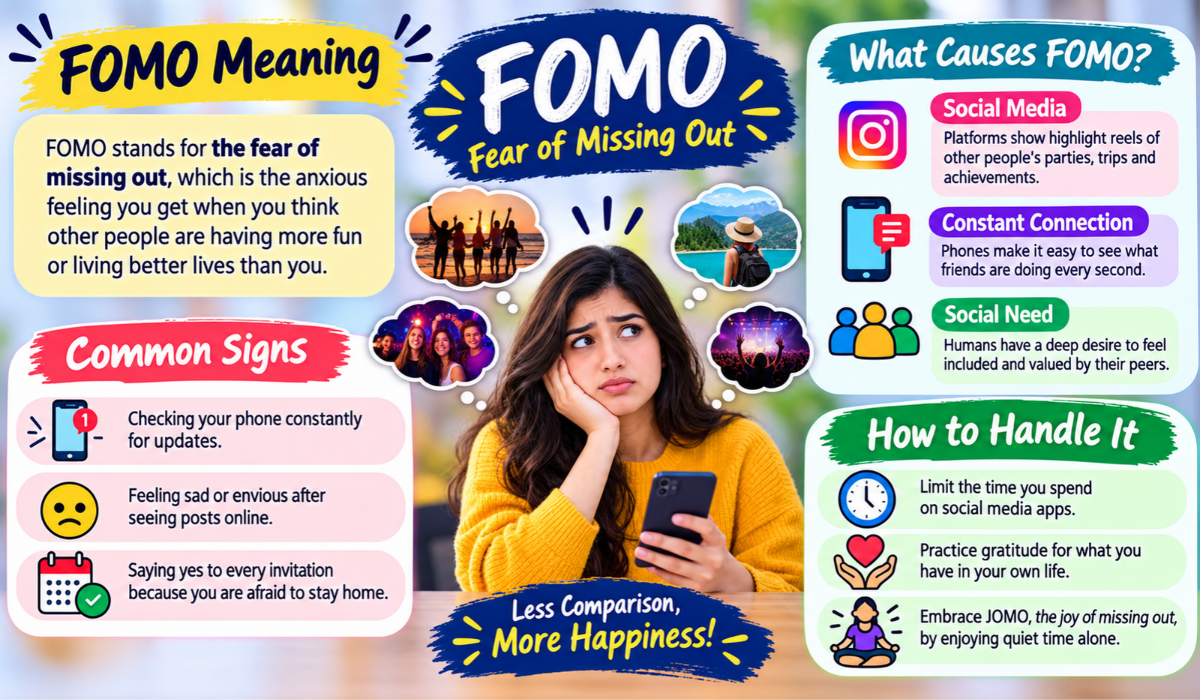
FOMO stands for “fear of missing out.” The FOMO meaning describes the anxious or uneasy feeling that you may be missing an exciting experience, social event, opportunity, or something enjoyable that other people are experiencing. It is especially common in the age of social media, where people constantly see photos, videos, achievements, parties, vacations, and updates from others. FOMO can influence everyday decisions, from attending events you do not really want to join to checking your phone repeatedly because you do not want to miss an update. Understanding what FOMO means, what causes it, its common signs, and how to manage it can help you build a healthier relationship with social media and your own choices.
FOMO Meaning
The FOMO meaning is “fear of missing out.” It refers to the feeling that other people are enjoying something valuable or exciting without you. You might experience FOMO when you see friends going out while you are at home, notice someone achieving a career goal, or discover that people attended an event you did not know about.
FOMO is not limited to major life events. It can appear in small everyday situations, such as feeling the need to respond immediately to messages, checking social media during dinner, or buying something because everyone seems to have it. The underlying feeling is often a concern that you are being left behind or missing an opportunity.
What Does FOMO Mean in Simple Words?
In simple words, FOMO means being afraid that you are missing something enjoyable, important, or valuable while other people are experiencing it. It can make you compare your life with other people’s lives and wonder whether you should be doing more.
For example, imagine you planned to stay home and relax, but you see pictures of your friends at a party. Suddenly, you feel that staying home was the wrong decision. That uncomfortable feeling is a common example of FOMO.
FOMO Meaning in Everyday Life
FOMO can appear in many areas of modern life, including friendships, relationships, travel, entertainment, shopping, education, and careers. Someone might feel FOMO after seeing a friend’s vacation pictures or after learning that colleagues attended a professional event. It can also affect decisions. A person may say yes to plans simply because they are afraid of being excluded, even when they would rather rest. Recognizing these patterns can make it easier to understand whether a decision comes from genuine interest or from the fear of missing out.
| Situation | Example of FOMO |
| Social life | Going to a party because you fear being left out |
| Social media | Constantly checking posts and stories |
| Shopping | Buying a product because it is trending |
| Travel | Feeling bad after seeing someone else’s vacation |
| Career | Worrying that others are getting better opportunities |
| Entertainment | Watching a show because everyone is discussing it |
Read Also: Angel Number 222 Meaning || Barbecue or Barbeque
What Causes FOMO?
FOMO can develop for several reasons, and social media is one of the biggest influences. Online platforms make it easy to see what other people are doing almost instantly. However, social media usually shows selected highlights rather than someone’s complete everyday life, which can create unrealistic comparisons. Another major factor is the human desire to belong. People naturally want to feel accepted, included, and connected to others. When we believe that other people are participating in something without us, that need for belonging can turn into anxiety or insecurity.
Social Media and FOMO
Social media can make FOMO particularly strong because updates are available around the clock. A person can see friends attending concerts, traveling, celebrating birthdays, purchasing new products, or reaching professional milestones within seconds. The problem is that these posts rarely show the complete picture. People usually share memorable or positive moments rather than boredom, stress, disagreements, or ordinary routines. Comparing your everyday life with someone else’s carefully selected highlights can therefore create unnecessary feelings of missing out.
Constant Connection
Smartphones have made it possible to remain connected almost all the time. Notifications, messages, stories, short videos, and trending topics can create the feeling that something important is always happening somewhere. As a result, some people find it difficult to put their phones away. They may check their devices during meals, while watching television, before sleeping, or even in the middle of conversations. The fear that a new update might appear can keep the cycle going.
The Need to Feel Included
Humans have a natural need for connection and belonging. Feeling included by friends, family members, classmates, or colleagues can contribute to emotional well-being. FOMO can appear when that sense of inclusion feels threatened. For instance, learning that your friends met without inviting you may cause disappointment or anxiety. While occasional feelings like this are normal, constantly worrying about being excluded can make social situations stressful and may encourage people to participate in activities they do not genuinely enjoy.
Common Signs of FOMO
FOMO does not look exactly the same for everyone. Some people experience it mainly through social media, while others notice it through their relationships, spending habits, or career decisions. The important thing is to recognize repeated patterns rather than worrying about one occasional feeling. Common signs include frequently checking your phone, feeling jealous of other people’s experiences, accepting plans you do not want, and comparing your life with others. You may also feel uncomfortable when you are not aware of what friends or people online are doing.
Signs You May Be Experiencing FOMO
Some common signs of FOMO include:
- Checking social media repeatedly for new updates.
- Feeling anxious when you are not included in a plan.
- Comparing your lifestyle with other people’s lives.
- Saying yes to plans because you fear missing something.
- Feeling jealous after viewing someone’s social media post.
- Constantly checking messages and notifications.
- Buying things because they are popular or trending.
- Feeling that everyone else is having a better experience.
- Finding it difficult to enjoy time away from your phone.
- Worrying about missing career or social opportunities.
Experiencing one of these signs occasionally does not necessarily mean that FOMO is seriously affecting your life. However, if these feelings happen frequently and interfere with sleep, relationships, finances, work, or your ability to relax, it may be worth taking a closer look at the pattern.
FOMO Examples
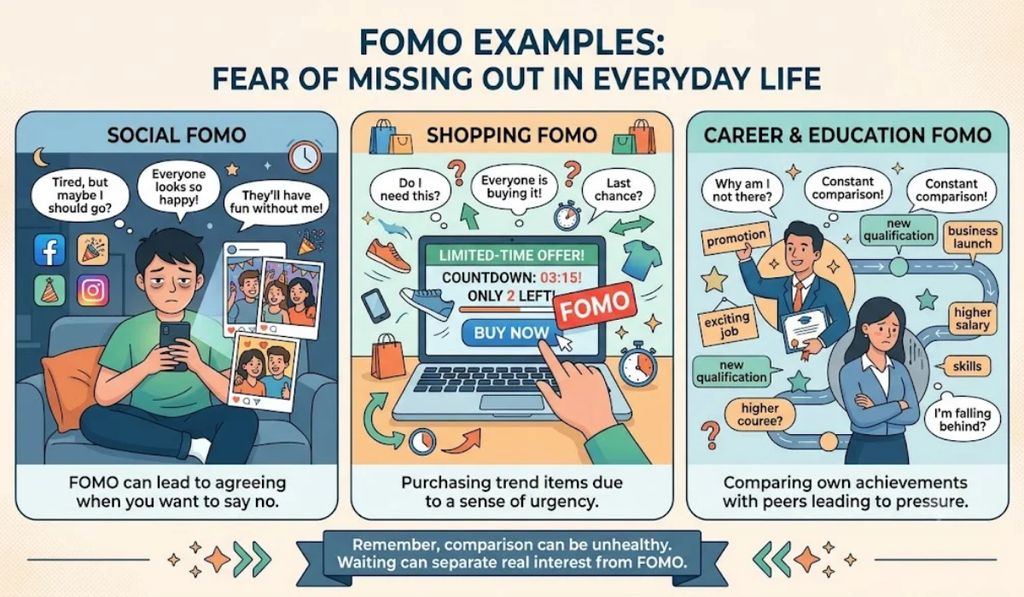
FOMO can be easier to understand through everyday examples. Consider someone who decides to stay home after a busy week but later sees pictures of friends at a restaurant. They may suddenly regret their decision and feel that everyone else is having a better time. Another example is career-related FOMO. An employee may see colleagues posting about promotions, conferences, or new opportunities and begin worrying that they are falling behind. The person may then make rushed decisions simply because they are comparing their progress with someone else’s.
FOMO in Social Situations
Suppose your friends invite you to a late-night gathering, but you are tired and would rather stay home. You agree because you are afraid that everyone will have fun without you. This is a classic example of social FOMO. FOMO can also happen when you are not invited. Seeing pictures or videos from an event can make you wonder why you were not included. Remembering that social media rarely provides the complete story can help put those feelings into perspective.
FOMO in Shopping
FOMO can influence purchasing decisions too. Limited-time offers, countdowns, “only a few left” messages, and viral products can create a sense of urgency. People may purchase something they do not need simply because they are afraid the opportunity will disappear. Before buying something because it is trending, ask yourself whether you actually wanted it before seeing the promotion. Waiting a little before making the purchase can help separate genuine interest from a temporary fear of missing out.
FOMO in Career and Education
Career FOMO can occur when people constantly compare their achievements with those of their peers. Seeing someone announce a promotion, new qualification, business launch, or exciting job can make you question your own progress. Comparison can sometimes motivate positive action, but constant comparison can also create unnecessary pressure. Everyone has different circumstances, timelines, goals, and definitions of success, so another person’s achievement does not automatically mean you are falling behind.
FOMO vs JOMO
JOMO stands for “joy of missing out.” While FOMO focuses on the fear that you are missing something, JOMO is about feeling comfortable with choosing not to participate. It encourages people to enjoy their own time instead of constantly worrying about what everyone else is doing. Choosing JOMO does not mean avoiding people or becoming disconnected. Instead, it means making intentional choices based on what genuinely makes you happy. You might decide to stay home, read a book, spend time with family, or simply relax without feeling guilty about missing an event.
| FOMO | JOMO |
| Fear of missing something | Comfort with missing something |
| Often driven by comparison | Driven by personal choice |
| Can create anxiety | Can encourage peace and relaxation |
| Focuses on what others are doing | Focuses on your own experience |
| Encourages constant checking | Encourages being present |
| “What am I missing?” | “What do I enjoy right now?” |
How to Deal With FOMO
Managing FOMO starts with recognizing when your choices are being influenced by comparison or fear. Instead of automatically responding to every notification or invitation, pause and ask yourself what you genuinely want. This small habit can help you make decisions based on your priorities rather than outside pressure.
It can also help to create healthier boundaries with social media. You do not have to delete every app or disconnect completely. Simple changes, such as limiting screen time, turning off unnecessary notifications, and avoiding social media before bed, can reduce the constant feeling that you need to keep up.
Limit Social Media Use
Reducing social media exposure can be an effective way to manage FOMO. Try setting specific times for checking apps instead of opening them whenever you feel bored or receive a notification. You can also unfollow accounts that consistently make you feel anxious or inadequate. Following content that is useful, inspiring, educational, or genuinely enjoyable can make your online experience more positive.
Practice Gratitude
Gratitude can shift your attention from what you think you are missing to what you already have. Take a few moments each day to think about people, experiences, opportunities, or simple things that you appreciate. This does not mean ignoring genuine problems or pretending everything is perfect. Instead, gratitude can help create a more balanced perspective and reduce the habit of measuring your life against other people’s highlight reels.
Focus on Your Own Goals
Everyone has a different timeline. Instead of asking whether you are doing as well as someone else, consider whether you are moving toward your own goals. Write down a few priorities for your personal life, education, career, relationships, or hobbies. When you have a clearer sense of what matters to you, it becomes easier to ignore opportunities that are attractive only because everyone else seems interested in them.
Practice JOMO
JOMO is not about missing out on life. It is about choosing what deserves your time and being comfortable with the things you decide not to do. You can practice JOMO by spending an evening without checking social media, enjoying a meal without your phone, taking a quiet walk, reading, or spending quality time with people you care about. The goal is to be present rather than constantly wondering what is happening elsewhere.
Is FOMO Always a Bad Thing?
FOMO is not necessarily bad in every situation. A small amount of concern about missing opportunities can sometimes encourage people to try new activities, reconnect with friends, attend useful events, or explore experiences they might otherwise overlook.
The problem arises when FOMO becomes a regular source of anxiety or controls your decisions. If you constantly feel pressured to participate, compare yourself with others, or stay connected online, it can reduce your ability to enjoy the present moment.
When FOMO Can Be Useful
Occasionally, FOMO can encourage positive action. For example, you might learn about an interesting workshop from a friend and decide to attend because it genuinely matches your interests. The key difference is motivation. If you participate because the opportunity aligns with your values and goals, that is different from attending simply because you are afraid everyone else will have fun without you.
When FOMO Becomes a Problem
FOMO may become problematic when it affects your daily life or emotional well-being. Constant checking, poor sleep, overspending, social exhaustion, and difficulty concentrating can all be signs that the fear of missing out is becoming excessive. If these feelings are persistent or significantly affecting your life, consider talking with a qualified mental health professional. Getting support can help you understand the underlying concerns and develop healthier ways to manage them.
FOMO Meaning in Texting and Social Media
In texting and social media, FOMO is commonly used as casual slang. Someone might write “I have FOMO” after seeing friends attend an event they missed. A person may also say “Don’t give me FOMO” when friends post pictures from an exciting trip or activity. The term is popular because it quickly describes a familiar modern feeling. It can be used seriously, humorously, or casually depending on the conversation. Understanding the context is important because someone saying “I have FOMO” may simply be joking rather than describing significant anxiety.
Common FOMO Phrases
Here are some examples of how people use FOMO in everyday conversations:
- “I have serious FOMO after seeing those vacation pictures.”
- “Don’t post the party photos; you’re giving me FOMO!”
- “I stayed home tonight, but now I have FOMO.”
- “Everyone is talking about that new show, and I have FOMO.”
- “I almost bought it because of FOMO.”
These examples show how FOMO has become part of everyday internet and texting language. The abbreviation is short, easy to understand, and widely used in casual digital communication.
FOMO and Social Media Comparison
One of the biggest reasons FOMO has become so familiar is the way social media encourages comparison. People can see hundreds of carefully selected moments from other people’s lives in a single scrolling session. However, an online feed is not a complete representation of reality. A person might share a picture from an amazing holiday without showing the long journey, unexpected problems, financial stress, or ordinary days surrounding that trip. Remembering this can make social media comparisons feel less powerful.
Why Social Media Can Intensify FOMO
Social platforms are designed around frequent engagement, which means users can receive a continuous stream of new content. Each update can create another reason to check the phone. When this becomes habitual, people may feel that they must stay updated to remain socially connected. Taking regular breaks can interrupt this cycle and create more space for offline experiences.
Frequently Asked Questions About FOMO Meaning
Q1. What does FOMO stand for?
FOMO stands for “fear of missing out.” It describes the feeling that you are missing an exciting, valuable, or important experience while other people are enjoying it.
Q2. What is the FOMO meaning in simple words?
In simple words, FOMO means worrying that you are missing something good that other people are experiencing. It can happen in social situations, shopping, entertainment, education, careers, and everyday life.
Q3. What is an example of FOMO?
An example of FOMO is staying up late to attend a party because you are afraid your friends will have fun without you, even though you would rather sleep. Seeing exciting social media posts can also trigger FOMO.
Q4. Is FOMO a mental illness?
FOMO itself is not generally considered a mental illness. It is a common emotional experience. However, persistent anxiety or compulsive behavior associated with FOMO may be worth discussing with a qualified professional.
Q5. What is the opposite of FOMO?
JOMO, or “joy of missing out,” is commonly described as the opposite of FOMO. It means feeling comfortable with choosing not to participate and enjoying your own time without worrying about what others are doing.
Q6. How can I stop feeling FOMO?
You can reduce FOMO by limiting social media use, turning off unnecessary notifications, practicing gratitude, focusing on your own goals, and spending more time on activities you genuinely enjoy. Taking intentional breaks from online comparison can also help.
Read Also: Button Pickup Lines || What Is FR in Text
